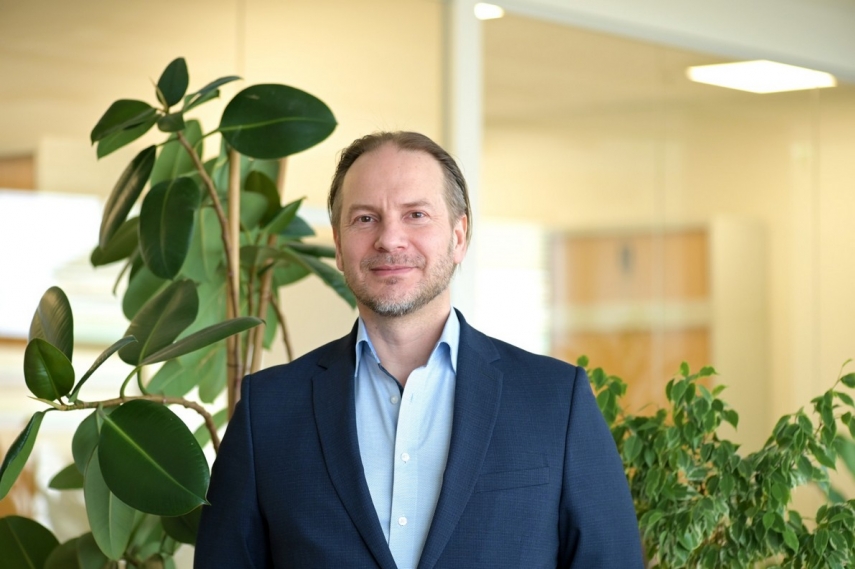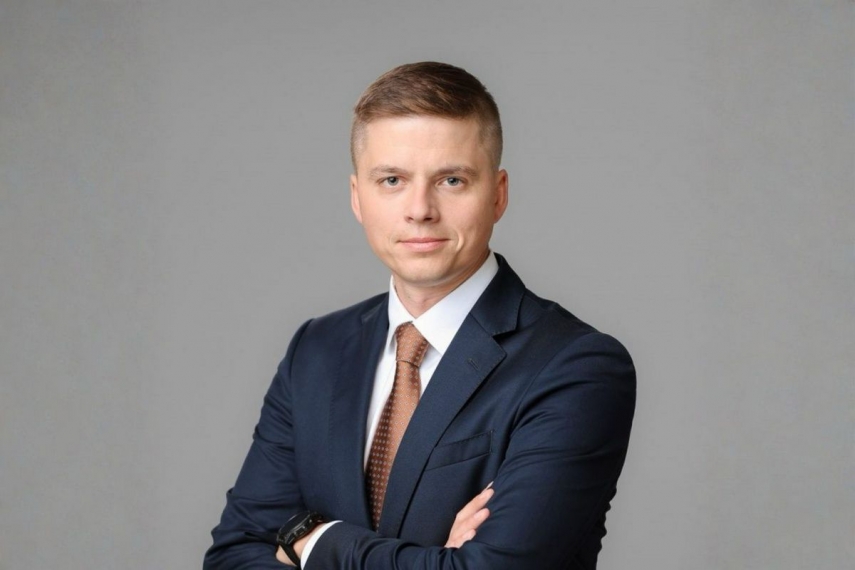
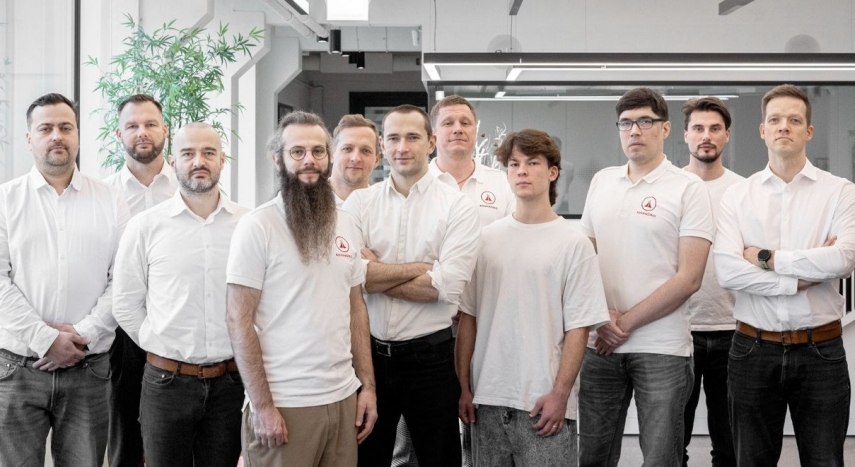
Photo: The AdvanGrid team has strong expertise in software development, electronics engineering, and embedded systems.
What if companies could see exactly where every kilowatt of electricity goes – and stop wasting it?
That's the challenge AdvanGrid, a Latvian energy-tech company, is tackling with a combination of smart sensors, AI-driven analytics, and real-time monitoring. “The company has transformed from a grid digitalization project into a comprehensive platform that offers a one-stop solution that combines resource monitoring, sustainability data and practical implementation,” Pauls Sondors, the Chief Operating Officer (COO) and Gustavs Upenieks, Support Lead, at AdvanGrid, told The Baltic Times Magazine.
What was the start of AdvanGrid?
AdvanGrid emerged from SIA Intelligent Systems, a Latvian technology company specializing in telematics, IoT, fleet management, and industrial monitoring solutions.
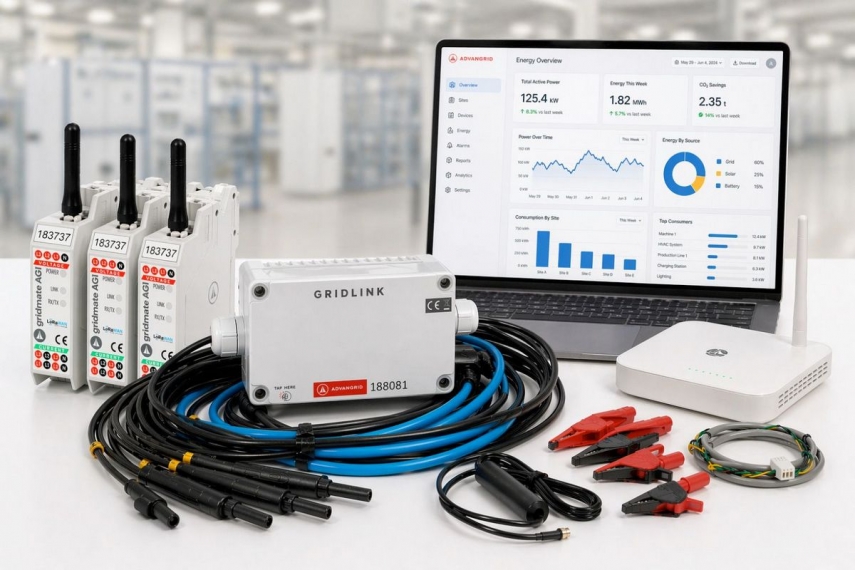
The team already had strong expertise in software development, electronics engineering, and embedded systems. The starting point for AdvanGrid was a project with Latvia’s distribution system operator, which aimed to digitalise electricity networks outside major cities. This led to the development of our first device, GridLink, which measures electricity parameters and transmits data to a central platform. At that stage, we had a working product, but the business model and ideal customer segment were still unclear. Through experimentation, we identified the need for a second type of sensor – smaller and more cost-efficient. This led to the development of GridMate, which measures consumption at a lower frequency but enables broader coverage. From that point on, AdvanGrid evolved into a complete electricity monitoring system, particularly suited for industrial companies with significant energy consumption. GridLink measures overall incoming electricity and quality, while GridMate tracks sub-consumption. Together, they provide a full energy balance in real time.
What sets you apart from others?
As mentioned, today, AdvanGrid is a one-stop solution that combines resource monitoring, sustainability data and practical implementation. We integrate data collection, AI-based analysis, CO₂ accounting and reporting aligned with ESRS requirements. At the same time, we bring real-world expertise through energy auditors, which allows us not only to provide data, but also to help companies act on it. Many companies focus only on software, but we maintain strong hardware development capabilities as well. We design and manufacture our own sensors, install them, maintain the system and continuously develop the platform. This approach is not easy, but it allows us to deliver a complete solution instead of solving only part of the problem.
How does your technology help save energy?
Our technology helps companies identify where energy is being wasted. For example, it can reveal unnecessary consumption during nights, weekends, or production downtime. It also highlights inefficient equipment, peak load issues and unusual consumption patterns. Once companies have this visibility, they can make targeted decisions instead of relying on assumptions. In many cases, even small operational changes result in measurable savings.
Who are your main customers?
Our main customers are companies with significant electricity consumption. These include manufacturing companies, industrial facilities, commercial buildings, and infrastructure operators. We also work closely with energy auditors, consultants and partners who use our technology to deliver better services to their clients.
What major milestones of the AdvanGrid development can you discern?
One key milestone was the development of our own electricity monitoring hardware. Another was building a platform that makes data practical and usable. A major step forward has been the expansion into sustainability and carbon accounting. Today, AdvanGrid is not only about measuring electricity – it is about helping companies understand and manage their environmental impact. We have also significantly expanded our international partnerships and export activities.
Can you give an example of a solution you provided for a client?
A strong example is a globally operating company in the printing industry. Initially, the client wanted to monitor electricity consumption. Over time, the project expanded to include air quality monitoring using CO₂ sensors and the development of customised reporting tailored to their internal requirements. Today, the cooperation has grown into a multi-site rollout across several countries. This type of system allows companies to identify issues, make data-driven decisions and later verify that improvements have delivered results. For management, it becomes a practical tool – like a smart watch – that shows whether everything is under control or where attention is needed.
How do your sensors work in simple terms?
Our sensors are installed either directly on electrical cables or inside distribution panels using non-intrusive equipment such as coils. The key advantage is that installation does not require stopping operations – everything can be done without power interruptions. Once installed, the sensors start collecting data and sending it to the platform, where it becomes immediately visible and actionable.
What are the biggest challenges in energy management today?
One of the biggest challenges is not technology, but resources on the client side. Even when data is available, companies do not always have the capacity or budget to act on it. For example, inefficient equipment may be identified, but replacing it requires investment. Another challenge is prioritization. Many companies focus on core operations, while energy management is treated as secondary – even though it has a significant long-term impact. That said, the situation is changing. The demand for monitoring and data-driven decision-making is steadily increasing.
How do you help companies benefit in becoming more sustainable?
You can only improve what you can measure. Sustainability, in practical terms, means using resources efficiently. This aligns directly with business efficiency. Even small improvements accumulate over time. If a company improves its processes slightly every day, the long-term impact becomes significant. We help companies move from assumptions to measurable results and from reporting to real operational improvements.
Do you cooperate with scientists and partners?
Yes, cooperation is a key part of our development. We developed our CarbonGrid sustainability module together with researchers from Riga Technical University’s Institute of Environmental Science. This allowed us to build strong competence in sustainability much faster. Working with scientists also ensures that our results are reliable and traceable, which is essential for sustainability reporting. We also actively collaborate with technology partners and integrate with existing systems in the market. In addition, we recently won a startup challenge organised by an Austrian distribution system operator. Over the course of three months, we are developing a tool that helps energy auditors perform audits more efficiently. The solution combines energy monitoring, the CarbonGrid module and AI-driven data analysis, and was presented at a demo day in May 2026.
What is next for AdvanGrid? And the electricity sector in general?
AdvanGrid’s development has been built in stages, each expanding the previous one. In 2026, we will continue to develop our sustainability solutions and expand internationally. We already have partners in Spain, Germany, Italy, the Netherlands, Saudi Arabia and other markets, and we are actively building new partnerships. We provide the technology and product, while local partners bring market knowledge and customer access. We have also started working in Africa, where many of the same challenges exist as in earlier stages of European energy systems. Looking at the broader electricity sector, high-quality data will become increasingly important. The real solution lies in a systematic approach — collecting data, turning it into insight, acting on it, and continuously repeating the cycle. This is how data becomes real impact.

Please enter your username and password.

2026 © The Baltic Times /Cookies Policy Privacy Policy