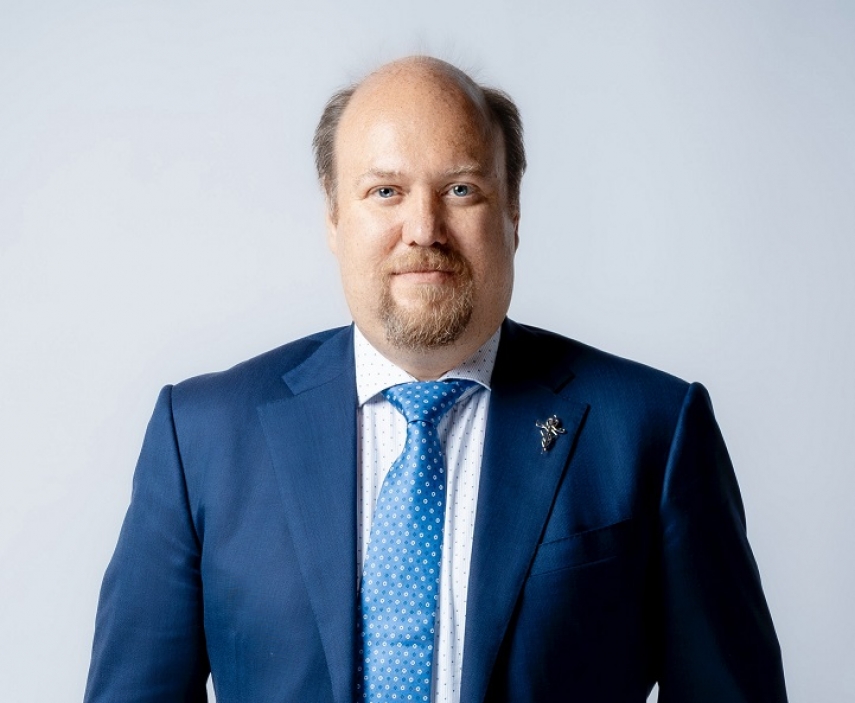
Photo: Olegs Cernisevs
As European fintech evolves, the companies shaping its core infrastructure are becoming more influential than the consumer brands built on top of it. StarBridge, once a specialised engineering consultancy, has grown into a quiet but essential force powering multi-rail financial systems across the continent. This interview with Dr. Olegs Cernisevs, founder of StarBridge, CTO of Blackcat, Doctor of Science, explores how the company emerged, where it is heading and why infrastructure – not interfaces – defines the future of fintech.
StarBridge today is known as a financial infrastructure company. But where did it actually begin?
StarBridge started very simply – with frustration. I spent years in banking and engineering and saw one recurring problem: fintech products were becoming more ambitious, but the underlying infrastructure was not catching up. Companies built great front ends on top of systems that couldn’t scale, couldn’t adapt to regulation or couldn’t handle risk in a predictable way. So, StarBridge started as an attempt to fix the “invisible layer” of fintech – the part that users never see, but that determines whether a product works or collapses under pressure.
And what was the moment you realised StarBridge was becoming something larger than an engineering consultancy?
When our clients stopped asking for “features” and started asking for “systems.”
We saw demand shift from individual modules – AML tools, monitoring, payment gateways – to building entire architectures that could operate across multiple financial rails: card payments, fiat accounts and later crypto. That’s when it became clear StarBridge wasn't just building tools. We were building the logic that holds financial ecosystems together.
You recently entered several partnerships and acquisitions. Which of them most changed the company’s trajectory?
The partnership with Manerio changed our scope. It pushed us into regulated crypto operations at scale. Suddenly we weren’t just integrating a crypto feature – we were running the operational, compliance and risk backbone for a licensed broker.
The acquisition of Baltic Technology Solution also mattered: cashback is still an underdeveloped segment in Europe. Even though card payments dominate – they account for about 57% of all non-cash transactions in the eurozone, according to the ECB – most banks and fintechs offer only very basic or narrow cashback options. At the same time, the European cashback market is projected to grow steadily, with reports estimating around 14% annual growth in rewards-related revenue. So, there is clear user demand, growing transaction volume and not enough meaningful supply. That’s exactly why we entered this niche. It’s a simple market gap: people want cashback, the infrastructure is not saturated, and we can deliver it on a solid technical base. Each milestone expanded StarBridge not horizontally, but in depth.
Among all the projects you’ve built, which one best demonstrates what StarBridge does?
That would be Blackcat. We didn’t build Blackcat for someone else – we built it as a full-scale deployment of our own principles. It’s where we could apply our architecture end to end multi-rail system (fiat + cards + crypto), modular wallet structure, unified risk model, compliance-by-design. Blackcat became a live environment where our ideas about system design were not theoretical – they were running in production every day.
For readers unfamiliar with Blackcat – what is it, and what did StarBridge contribute to it?
Blackcat is a next-generation European fintech brand built on a straightforward idea: to give users a clear, flexible way to manage their money across multiple financial environments. The app offers a modular wallet system where users can open several euro accounts or dedicated wallets for major cryptocurrencies such as USDT, USDC, BTC and ETH. Funds can be separated for different purposes – daily spending, savings or specific goals – while remaining part of one secure, unified ecosystem.
In practical terms, Blackcat includes features that many users in Europe still struggle to find in one place: free SEPA transfers to personal and third-party accounts (five free transfers per month, followed by a €0.20 fee); support for card-to-card transfers; an integrated crypto service for buying, selling, storing, sending and receiving assets; a 4% bonus on euro balances without locking funds
All of this is available on a fully free plan, and cashback is paid in euros – not in points or internal bonuses. StarBridge provided the full technical backbone behind Blackcat: the multi-wallet architecture, the risk logic, the settlement mechanics, the crypto–fiat bridge and the monitoring infrastructure. In other words, StarBridge built the system that allows all these features to operate coherently, securely and in compliance with European standards.
You publish academic research on risk modelling and digital resilience. How does research translate into product decisions?
Research gives us something engineering rarely provides: measurable certainty.
Financial systems are complex – behaviour changes under stress, edge cases appear where no developer expects them. Academic work helps us model these systems and understand them structurally.
At StarBridge, research is not a separate activity. It becomes algorithms, monitoring rules and architecture decisions. This approach helped the EMI issuing Blackcat become one of the first direct SEPA participants – a level of regulatory trust you don’t achieve by improvisation.
You also recently joined Latvia’s delegation to Germany, speaking about cross-border cooperation. What opportunities do you see there?
Our delegation was exploring opportunities in Northern Germany, Hamburg and Mecklenburg-Vorpommern in particular. These regions have a chance to grow into a major technological hub with large-scale data infrastructure, renewable energy capacity and physical space to expand. In the Baltic countries, all these resources are not always available. However, the Baltic countries have what Germany sometimes lacks: speed, digital maturity and fintech engineering talent.
If you combine these strengths, you can build infrastructure that is both technologically advanced and industrially scalable. This is where I see the next wave of cooperation: data centres, financial rails, digital resilience and AI-driven risk systems.
Emerging technologies are changing finance. Which ones will actually matter in infrastructure – not in hype?
AI will reshape monitoring and anomaly detection – but only if it becomes explainable and auditable. Blockchain will continue to matter where transparent asset logic is required.
But the real transformation comes from combining these tools within regulated environments.
Technology matters only when it survives compliance – not when it looks impressive in a demo.
Finally: what is the long-term direction for StarBridge? Where do you see the company heading?
We want to remain an infrastructure company – but one that influences how European fintech is built. Our goal isn’t to compete with consumer brands. It’s to design the systems, the risk models and the operational logic that other companies rely on.
Blackcat proved that our approach works at scale. The next step is using that experience to help build the financial infrastructure Europe will need in the next decade.

Please enter your username and password.

2026 © The Baltic Times /Cookies Policy Privacy Policy