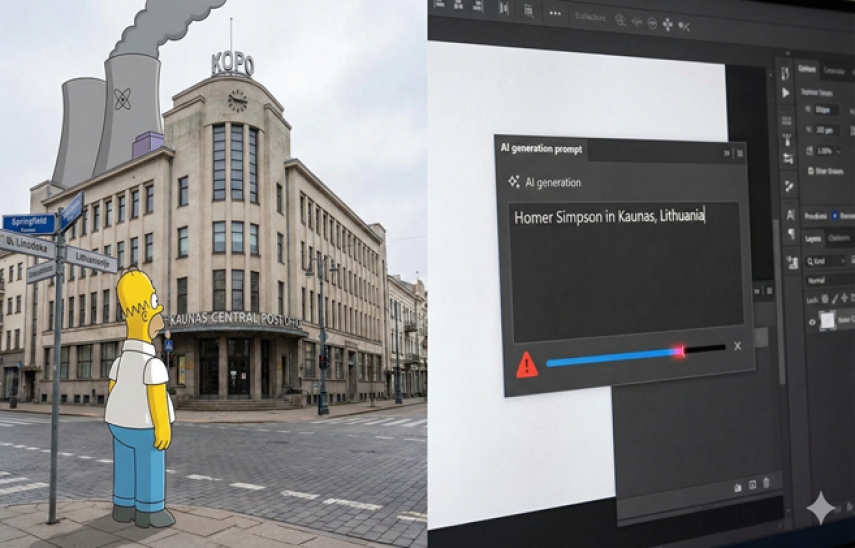
A viral AI-generated video depicting characters from The Simpsons in the streets of Kaunas has raised a red flag among Intellectual Property (IP) lawyers. While thousands of social media users enjoyed the playful fusion of global pop culture and Lithuanian scenery, legal experts warn that similar “creative” content can expose brands, agencies and page administrators to serious copyright and trademark risks.
According to specialists at METIDA, the case illustrates how rapidly evolving AI tools collide with long-standing IP laws — and how businesses may misjudge the legal consequences of using famous characters in marketing.
A fun post with serious legal implications
The video, posted by “Kaunas Bunda,” displayed AI-generated versions of Homer, Marge and Bart Simpson integrated into recognizable Kaunas locations. Although the content was praised for creativity, it also unintentionally showcased a common marketing mistake: assuming that AI-generated visuals are “free to use.”
“They are not,” METIDA experts emphasize.
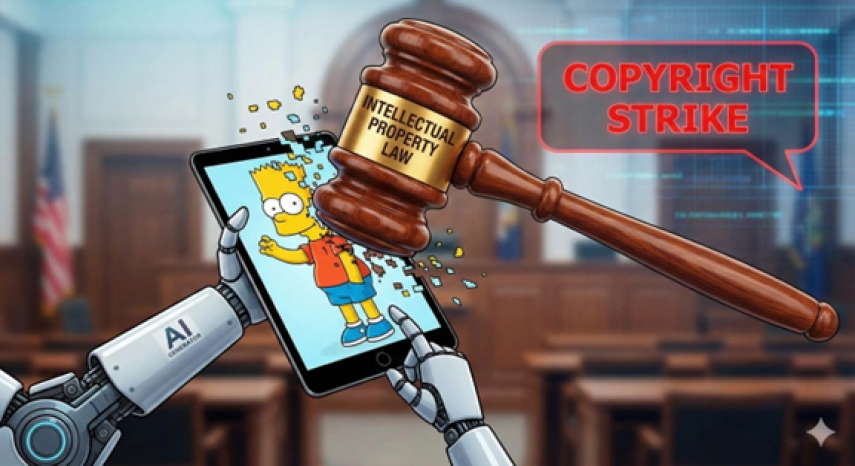
AI-generated characters remain protected if the originals are protected — and The Simpsons are among the most closely guarded entertainment properties in the world.
Protected twice: copyright + trademark
Characters like the Simpsons family benefit from a dual layer of protection:
Copyright
Homer, Marge, Bart and Lisa are original artistic works owned by 20th Century Fox, now part of The Walt Disney Company. Reproducing or adapting these characters — including via AI — typically counts as creating an unauthorized derivative work.
Learn more about copyright here:
https://metida.com/law-services/copyright/
Trademark
The visual identity and names of the characters are also registered trademarks. Using them to increase engagement, drive page traffic or enhance brand visibility can be interpreted as leveraging Disney’s brand reputation without permission.
Businesses can learn more about trademark basics at:
https://metida.com/trademarks/
Disney’s global enforcement: Small Page ≠ Small Risk
Many assume that a global corporation would not target a small Lithuanian Facebook page. In reality, rights holders such as Disney are known for strict and automated global oversight of their IP.
“Allowing small infringements weakens their ability to fight large ones,” METIDA’s specialists note. As a result, Disney regularly issues takedown notices even for minor online content posted in small markets.
Automated detection technologies also mean that geography is no longer a barrier: infringing content can be flagged within minutes.
What happens when a rights holder reacts
If studios like Disney object to the use of characters, escalation usually follows a predictable path:
1. Platform takedown
Facebook or Instagram removes the content. Accounts can receive warnings or restrictions.
2. Cease-and-Desist letter
A formal demand to stop using the protected material and not repeat the infringement.
3. Legal claim
In court, rights holders may request:
- Injunctions forbidding further use;
- Damages equal to the licensing fee the infringer would have had to pay.
For many small and medium-Sized enterprises, such amounts can be financially devastating.
The AI question: who is responsible?
The rise of generative AI has created global legal uncertainty, and several studios are currently suing AI platforms, arguing improper training on copyrighted materials.
However, this does not shift liability away from the user.
The person or business who prompts, selects and publishes the content is responsible for the resulting infringement. AI is treated as a tool — similar to Photoshop — not as the creator or the liable party.
“AI can generate anything,” METIDA notes, “but it cannot generate permission.”
Key takeaways for businesses, agencies and creators
The “Simpsons in Kaunas” moment is a valuable lesson for the Baltic marketing community. METIDA experts outline several recommendations:
1. Pre-check pop culture references
Any character, logo or iconic visual requires legal clearance before publication. When unsure, consult an IP lawyer.
2. Avoid fan art and look-alikes in commercial content
Fan art may be tolerated in private spaces, but businesses face much stricter standards.
3. Don’t assume AI images are legally usable
If AI outputs resemble known brands or characters, they remain protected.
4. Prioritize original creative assets
AI is best used to support original concepts, not imitate known franchises.
5. Educate internal teams and contractors
Many infringements are accidental — created by designers or agencies unaware of IP rules.
Conclusion
The viral Simpsons video brought a moment of fun to Lithuanian social media — but it also highlighted a wider issue. As AI-generated content becomes mainstream, brands must navigate a legal landscape that remains strict, especially when dealing with companies like Disney.
Short-lived virality is rarely worth long-term legal exposure.
For brands, agencies and creators seeking to innovate safely, understanding IP law — and partnering with specialists — is now essential.
About METIDA
METIDA is a leading Intellectual Property law firm in the Baltic region, specializing in trademark, design and copyright protection. With a team of experienced attorneys and patent agents, METIDA helps businesses navigate the complex landscape of modern IP law, ensuring your creative assets are protected and your business remains compliant.
Have questions about AI, patents, copyright or brand protection?
Contact METIDA today: https://metida.com/contacts/
About the author:
Erikas Saukalas is Metida Partner, Attorney-at-Law, providing legal services
Renowned expert in trademark law, specializing in EU, UK, and US trademarks. Erikas has over 15 years of experience advising clients on a wide range of intellectual property matters, making him a highly sought-after consultant for international IP strategy and trademark prosecution.

Please enter your username and password.
2025 © The Baltic Times /Cookies Policy Privacy Policy