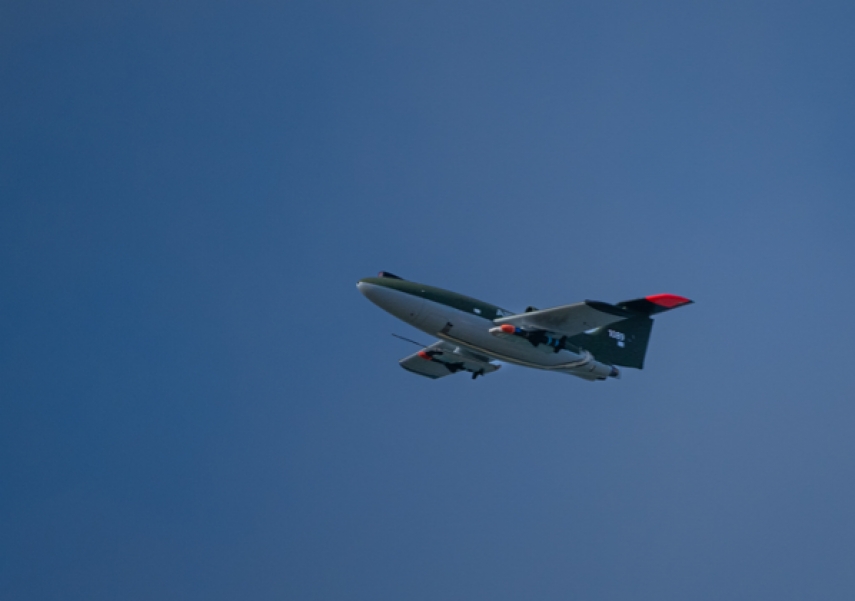
TALLINN - The number of security-related media reports concerning Estonia increased significantly in March, primarily due to Ukrainian drones entering Estonian airspace, a review by the Government Office reveals.
The so-called Auvere incident, in particular, captured international media attention, generating over two thousand reports in nearly one hundred countries. The story was covered by all major publications and news agencies, including AP, Reuters, Bloomberg, DPA, and AFP. The events in Estonia were further amplified by other articles that mentioned the incident while focusing on drones that crashed in Finland or Ukrainian attacks on the ports of Ust-Luga, Primorsk, and Vyborg.
The coverage largely relied on materials from Estonian media and quoted statements from Estonian spokespersons at press conferences, which ensured the accuracy of the content. However, some errors did occur. For instance, the term "Russian drone," initially used by ERR News, was picked up by several publications, though the mistake was later corrected. Some reports also included Ukrainian speculation that Russia might have deliberately diverted the drones toward Estonia. British tabloids were notable for their typically dramatic headlines, such as "Russian drones attacked a key power plant while Putin deepens the war of aggression," and for amplifying Kremlin propaganda.
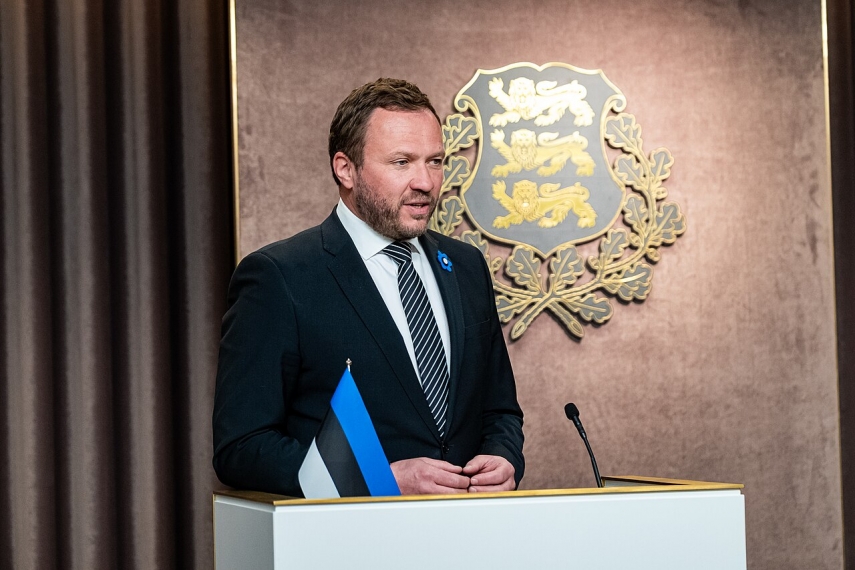
In March, the international media's primary focus was on the Middle East, specifically the war in Iran. In this context, Estonia also garnered significant media attention, mainly for its readiness to discuss the situation in the Strait of Hormuz. This set Estonia apart from several other European allies who declined to participate in a US-led operation. However, the reports also highlighted Foreign Minister Margus Tsahkna's statement that European allies wish to understand Trump's strategic goals and plans.
The violation of Estonian airspace by Russian Su-30 fighter jets near Vaindloo island also received surprisingly widespread attention, with nearly two hundred reports. Tabloids once again stood out with dramatic headlines, such as "NATO jets scrambled to intercept Russian warplane as it enters Estonian airspace," although the articles themselves were generally more balanced. The coverage included quotes from reassuring social media posts by the prime minister and foreign minister. Prime Minister Kristen Michal stated, "Our airspace is constantly monitored and protected," while Foreign Minister Margus Tsahkna added, "There was no threat to Estonia's security."
Other topics included a broad appeal from the leaders of Germany, Estonia, Finland, Latvia, Lithuania, Poland, Romania, and Sweden for the European Union to impose an entry ban on Russian combatants who have fought in the war in Ukraine, citing potential internal security threats. Additionally, there was coverage of a boating accident in Greece where an Estonian patrol boat, participating in a Frontex operation, capsized and sank near the island of Kastellorizo. The Estonian ambassador to Greece was on board at the time. Fortunately, all five people on board were rescued, and the injured were airlifted to a hospital in Rhodes.
A more negative event during the month was a fringe information operation that originated on Russian social media, calling for the declaration of a "Narva People's Republic" in eastern Estonia. The "Is Narva next?" narrative has been circulating in Western media since the 2014 annexation of Crimea and has intensified since Russia's full-scale invasion of Ukraine, so the "people's republic" theme quickly garnered media attention. Over the month, several hundred articles about "Narva separatism" were published across Europe, particularly in Germany and France. Major outlets like Le Figaro, Bild, and Euronews covered the story, with Euronews publishing its report in nearly ten languages, ensuring it reached a vast audience.
Initially, the incident was primarily framed as a Russian influence operation and an element of hybrid warfare, with an emphasis that it was an artificial narrative circulating on social media rather than a genuine movement. It was also linked to the Donbas scenario and interpreted as an attempt to test NATO and European resilience to information operations. Later, the "people's republic" theme was connected to the Auvere drone incident, suggesting Russia could use Ukrainian drone attacks as a pretext for action against the Baltic states while concurrently running information operations and fueling tensions. The situation was also linked to internal NATO tensions and the United States' focus being diverted by the war in Iran, which could present the Kremlin with an opportune moment to test the alliance's unity.

Please enter your username and password.

2026 © The Baltic Times /Cookies Policy Privacy Policy