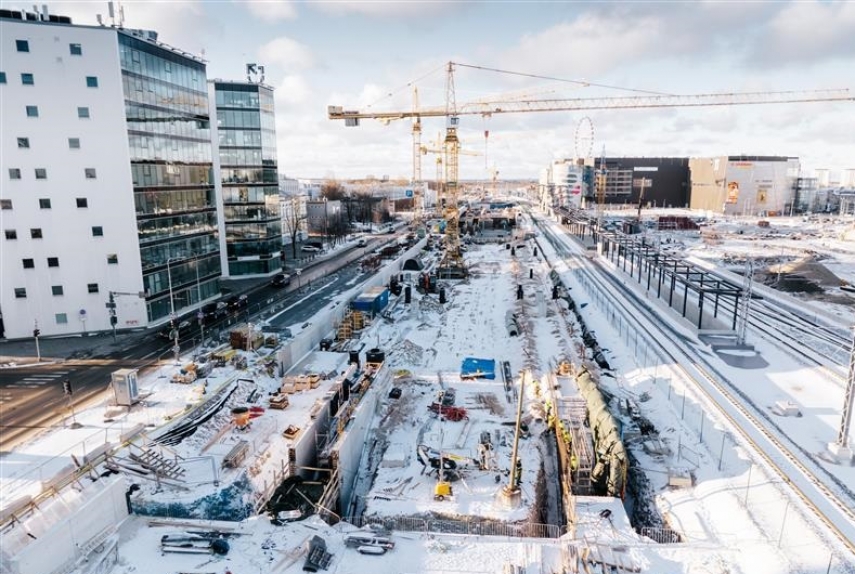
Rail Baltica has moved to the next stage of its consolidated construction materials procurement, with several framework agreements for key track components now signed or close to being finalised. The centralised procurement model, implemented together by Estonian, Latvian and Lithuanian delivery organizations and led by the central coordinator of the project, plays an important role in making sure the future high-speed railway is developed as one connected and compatible system.
Framework agreements establish pre-agreed conditions for pricing, performance, quality assurance and delivery schedules without creating immediate financial commitments. This structure allows national implementing bodies to place orders in line with actual construction progress, maintaining flexibility while securing supply chain reliability.
Contracts covering cableway systems, including cable ducts and multiducts, have been finalized, and the materials are already available for ordering. The sleeper contract was signed in December last year and has entered its commencement phase, with materials expected to become available for ordering from September 2026.
Rail supply contracts in Latvia have also been signed, with initial implementation activities already underway. Rails are expected to become available for ordering from July 2026, while railway ballast is planned to be available from September 2026. Contracts for turnout systems, high-speed turnouts and rail expansion joints have also been concluded. The first materials are expected to become available for ordering by the end of 2026, enabling the start of certification processes for the first types in line with the Rail Baltica implementation schedule.
“By procuring track construction materials for the entire Rail Baltica mainline collectively, rather than on a country-by-country basis, we can secure the required supplies at the right quality and at competitive prices. Large-volume ordering strengthens our negotiating position and enhances price stability in a volatile construction market,” said Thierry Boussillon, Chief Programme Management Officer and Member of the Management Board at RB Rail. “Harmonised technical standards across the three Baltic states ensure consistent material specifications and compliance with the highest safety requirements for high-speed rail, while strengthening certainty of delivery by enabling large-scale procurement from major, established suppliers in the international rail market.”
For background
The seven-year framework agreements establish transparent supply conditions, competitive pricing, and long-term planning in line with EU funding principles.
This consolidated approach ensures the use of standardized, high-quality materials across the entire railway line, delivering economies of scale, improving reliability of supply, and supporting sustainable supply chains - a model widely applied in major European railway projects.
The total maximum estimated value of the consolidated superstructure procurements amounts to €1.13 billion and is subject to the availability of financing and the Rail Baltica implementation schedule.
About Rail Baltica
Rail Baltica is one of the largest high-speed rail projects in Europe and is part of the Trans-European Transport Network. It aims to improve connectivity, strengthen regional security and support economic growth in the Baltic states. The new railway will link Estonia, Latvia and Lithuania with Poland and, indirectly, with Finland, as well as with the broader European rail network.
Rail Baltica will be fully electrified with a standard gauge of 1435 mm and it will be equipped with ERTMS (European Rail Traffic Management System). It has been designed to meet European standards. With a design speed of 249 km/h, Rail Baltica will reduce travel times between the Baltic states and major European cities by more than half. It will serve as a modern infrastructure for passenger, freight and military mobility, promoting accessibility and facilitating business, tourism and cultural exchange. Rail Baltica will help establish the Baltics as a key link in European trade and cooperation.

Please enter your username and password.

2026 © The Baltic Times /Cookies Policy Privacy Policy