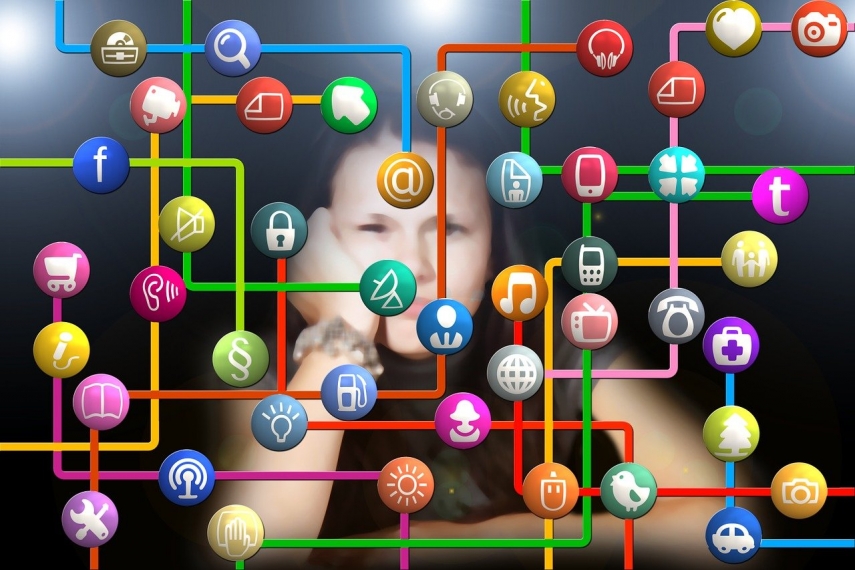
Photo: Gerd Altmann from Pixabay
VILNIUS - Lithuanian MP Daiva Ulbinaite of the opposition conservative Homeland Union - Lithuanian Christian Democrats, plans to propose setting a legal age limit for social media use in Lithuania and requiring platforms to bar people under 16 from becoming independent users.
Under the proposal, social media companies would have to apply reliable age-verification tools based on technology rather than self-declaration.
Platforms would be obliged to block registration or use by under-16s unless there is a lawful basis, with administrative penalties for non-compliance.
"The current procedure just ticks the box, and that's self-regulation, isn't it? I say I'm 18, and they just believe me. We are imposing an obligation on platforms to implement effective technologies to enable the age of users to be verified in practice," Ulbinaite told a press conference on Friday. "Various verification methods are probably possible for this purpose, including bank or payment service verification and age verification by mobile operators. (...) Greece has developed a special app. These options are available if there is a will to use them."
Social media platforms that fail to comply with the established age verification requirements would face administrative liability. It is proposed to supplement the Code of Administrative Offenses with a provision that failure to comply with such obligations would result in a fine of between 500 and 1,500 euros for online platform service providers, and between 1,500 and 4,000 euros for repeat offenders.
The Communications Regulatory Authority would oversee compliance with these requirements.
Ulbinaite said 97 percent of minors use the internet daily, and nearly half of 13-17-year-olds constantly check their phones.
"Almost half of Lithuanian schoolchildren have problematic social media use, and almost one in four has a digital addiction," Ulbinaite underlined.
Rasa Jauniskiene, head of the Digital Ethics Center, said that when the campaign to ban mobile phones in schools began, the true extent of children's addiction to them became apparent.
"We heard testimonies from schools that after putting phones in lockers, we finally saw children who really needed help because they were already experiencing withdrawal symptoms. They were shaking, banging on the lockers, unable to stay still. Only then did we see it. As long as the phone is in the child's hands, we cannot even notice a person who has already developed an addiction and needs help," she said.
Ulbinaite says that dangerous online challenges, particularly on TikTok, have in some cases led to self-harm or death.
"Unfortunately, such cases have also occurred in Lithuania," she said.
Ulbinaite noted that children are exposed to bullying, sexual exploitation and illegal activities on social media.
"Children's safety and social media are clearly incompatible," she said, adding that education and digital skills alone are not enough to address the risks.
"Therefore, clear legal regulation, oversight, and real platform responsibility are essential. After all, age or maturity restrictions apply to dangerous things such as tobacco, alcohol, and gambling. Experts unanimously agree that there must also be a clear line in the digital space when a person is considered a digital adult, capable of understanding the risks and taking responsibility for what they do there," Ulbinaite underlined.
"Therefore, after assessing the threats to our children and the recommendations of experts, we have drafted amendments, proposing to establish the age of digital adulthood in Lithuania at 16," she said, adding that this would be the age at which minors could use online platforms independently, without the consent of their parents or guardians. Until the age of 16, access to social media should be granted by parents who have given their special consent.
According to Ulbinaite, more than ten EU countries have already announced or are considering or preparing draft laws restricting minors' use of social networks.
Australia already has a 16-year-old threshold for using social media in place, France has set a digital age of majority at 15 and requires platforms to verify age, Greece also applies a 15-year-old age limit and has created a special electronic identity, parental control, and age verification app called Kids Wallet.
Ulbinaite says that her amendments are intended to start a discussion on children's access to social media.

Please enter your username and password.

2026 © The Baltic Times /Cookies Policy Privacy Policy