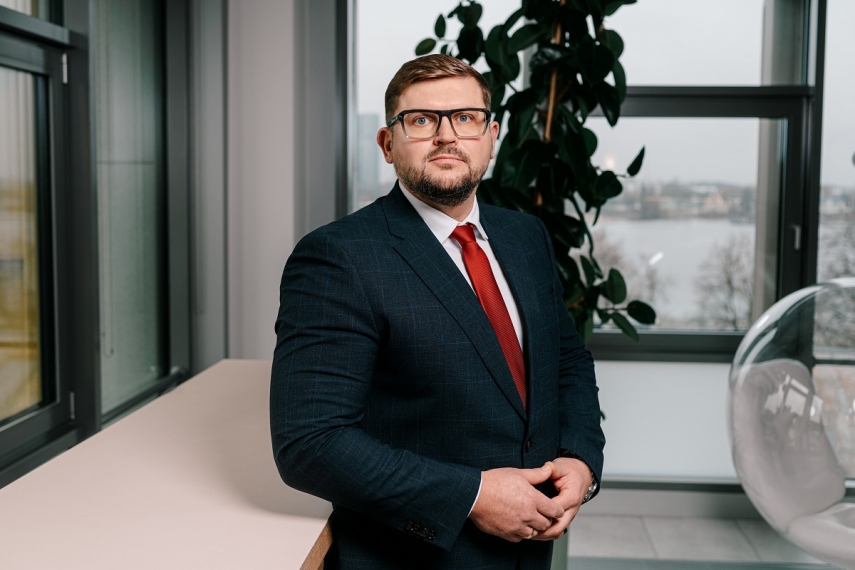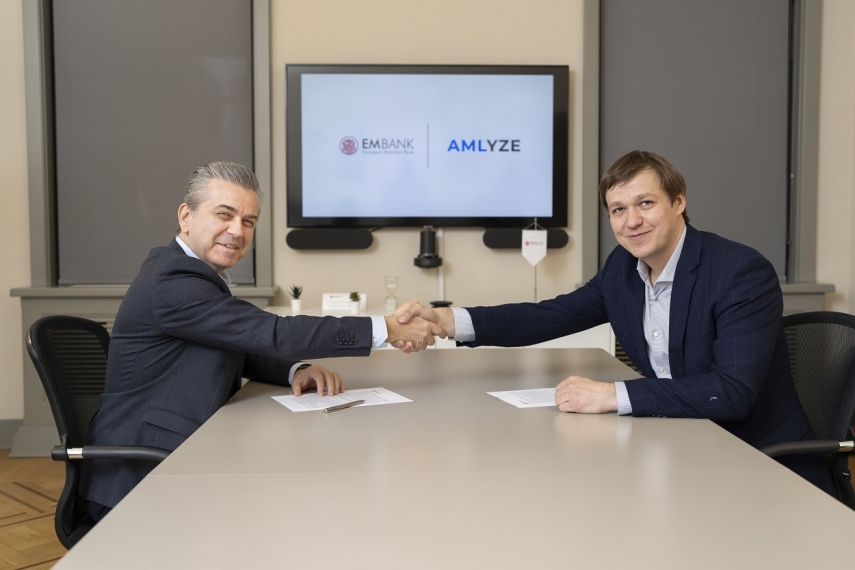

Photo: Evija Celma
The importance of reading is undeniable. Reading helps expand theoretical knowledge and elevate professionalism in any position, from assistant to CEO. The experience of other managers on how to lead teams is invaluable. But there is another equally important aspect – reading allows you to broaden your cultural horizons and understand the history and social structure of other countries, which can be key to successful communication with your team in international companies.
The experience of other leaders has been extremely valuable to me in terms of what works and what doesn't when leading teams and processes, how to work in a global teams and online environment when you can't physically meet and feel your teammates. If the team has up to 50 people, you need one management style, but for larger teams, you need a completely different one, and you have to completely change your thinking and team organization processes. It can be hard to "figure it out" on your own. Undoubtedly, life experience is most effectively gained by learning from mistakes, but we can try to avoid them and gain the necessary experience in other ways, such as by reading about the experiences of other leaders.
However, I am also interested in other literary genres, especially - as the leader of a multinational team - literature that reflects the cultures of different countries. Working with teams in India, Malaysia, Costa Rica, and Europe, it is important for me to see how the history and society of these countries have developed, and literature is a great way to learn about other cultures. Therefore, we shouldn't deny ourselves the opportunity to explore a variety of genres. it's worth stepping out of your own "bubble" of interests from time to time and perhaps gaining a completely fresh perspective on things you think you already knew.
Leaders tend to be very busy, their schedules are overloaded, and, after all, no one has canceled life outside of work. However, this doesn't mean that reading should be abandoned. In my opinion, audiobooks are a great answer to this challenge. Many people have preconceptions about them, but I would recommend giving them a try and finding a genre that's even easier to listen to than to read. For example, books on heavy topics that would be easier to simply close and put aside forever. Audiobooks are a great way to explore new formats and genres. In times when artificial intelligence handles routine tasks, it’s easier to find more time in your calendar. If necessary, you can even reserve time for reading that book.
Reading should be conscious and planned, which is why I started a book club that has been running for two years now. The club members are very diverse, and every month we read very different books on cultural aspects, historical horizons, and future perspectives. I probably wouldn't choose many of them myself, so participating in book clubs helps me not only to focus on professional literature, but also to broaden my horizons. Another way to encourage myself to read is to set a goal each year for how many books I want to read. It may seem like a small thing, but this idea can be quite persistent and drive me forward.
The culture of curiosity and learning through reading can also be promoted within your organization. For example, Roche has a very strong internal culture of community building, where employees can come up with their own initiatives and invite other employees to participate. Reading books is one such initiative. Roche supports this by creating books that, while keeping the company's core business - pharmaceuticals - as the central axis, also provide a contextual view of how and why various processes take place. For example, the Museum of Decorative Arts and Design in Riga recently hosted an exhibition entitled "Courage and Care. Architecture and Design: Roche's Vision", which also included an exhibition catalog/book – inspiring literature on how the company, since its inception, has paid great attention to the architecture of both its production and administrative and research buildings, as well as the international marketing of Roche products, in which thoughtful graphic design has played a significant role. Published a few years ago, the book "The Homecoming. Roche in Riga: a Historic Remediation" (editor Alexander Bieri, designer Alexey Murashko) won a silver medal in the European Design Award competition. The book tells the story of a functionalist-style building located on the corner of Miera Street and Palīdzības Street in Riga, which was built by Roche in 1932 as part of the company's expansion into Eastern Europe. This was one of the first modernist buildings commissioned by Roche, marking a new business style and a new level of corporate presence in Latvia.
Even if every leader only had time for one book, I think it should be How Big Things Get Done: The Surprising Factors That Determine the Fate of Every Project, from Home Renovations to Space Exploration and Everything In Between. First, the book teaches how important it is to have proper, data-driven planning when starting any project so that it can then be implemented quickly, effectively, and within the budget. Second, in order to solve various challenges, leaders need to learn what the authors call the "Lego approach" or learn to break large projects down into smaller parts. By dividing something large into smaller, repeatable elements, you can accelerate the learning curve, reduce mistakes, and turn a high-risk project into a predictable undertaking with low risks. The book contains wonderful examples from around the world: here you can learn why the Sydney Opera House was one of the most unsuccessful projects in the world in terms of both cost planning and construction speed, and discover examples of huge railway projects that make you think a lot about RailBaltica.
Just as the world's most grandiose buildings are not built by one person, leaders are not alone on their journey toward their goals The question is how open our minds are and how willing we are to let other people's experiences help us in our daily lives. I wholeheartedly recommend that everyone experience how a book can change your life. Or at least your day.

Please enter your username and password.
2026 © The Baltic Times /Cookies Policy Privacy Policy