TALLINN - During the European Council discussions in Brussels on Thursday, European Union leaders focused on the rapidly changing security situation, continued support for Ukraine, achieving stability in the Middle East, and European competitiveness.
At the Council, Estonia raised the need to establish an EU-wide ban on entry into the European Union for those who have participated in military activities on Russia's side in Ukraine. Estonia has set an example by imposing an entry ban on the Schengen area for more than 1,300 Russian fighters to date.
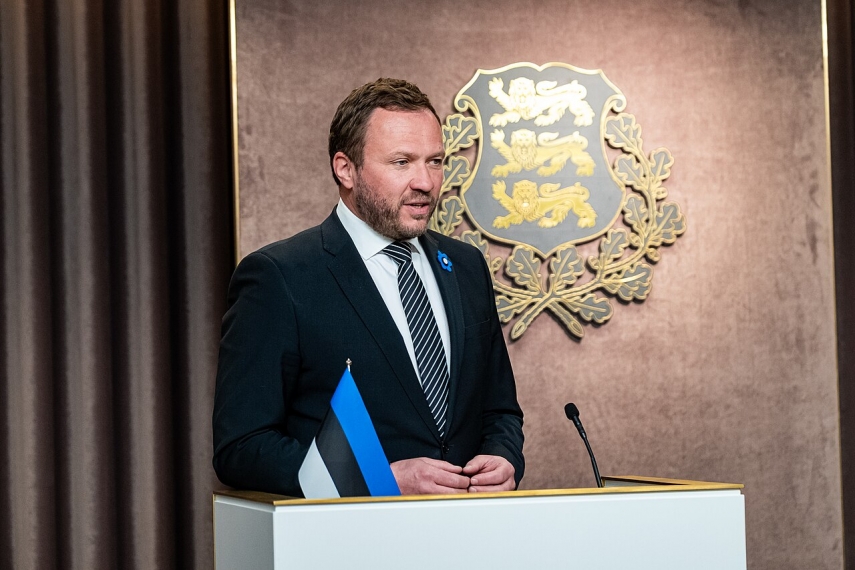
"This is a matter of European internal security. The entry of Russian fighters into Europe poses a risk that requires EU-wide solutions to mitigate. At the Council, we achieved what we requested - the European Commission received a clear directive to propose ways to prevent Russian fighters from entering Europe," said Prime Minister Kristen Michal.
Ukrainian President Volodymyr Zelenskyy participated in the Council via video link. Continued firm support for Ukraine was affirmed, and the need to maintain pressure on Russia was emphasized. Unfortunately, the discussions were overshadowed by the ongoing situation where Hungary is blocking the implementation of previous decisions, the most urgent of which is the immediate provision of a 90 billion euro loan to Ukraine.
"Such actions are in direct contradiction with the strategic interests of the European Union and weaken the credibility of Europe as a whole. Support for Ukraine cannot be held hostage by the domestic political interests of a single member state. This is not acceptable; agreements must be respected," Michal noted.
The Prime Minister emphasized the need to move forward decisively with the next sanctions. "Unfortunately, in the current situation, Russia is earning significant extra revenue from high energy prices. This makes it all the more necessary to maintain pressure and impose new sanctions," he said.
One of the Council's central topics was the functioning of the European economy, the business environment, and developments in energy markets. The leaders confirmed the need for a review of the Emissions Trading System (ETS). The Estonian Prime Minister emphasized the importance of mitigating price volatility in this regard. The Commission must present its ETS proposal by July of this year at the latest. In this context, accelerating the development of interconnections and renewable energy is crucial to avoid dependence on fossil fuels from third countries.
"Following Estonia's example, European Commission President Ursula von der Leyen welcomed the implementation of the once-only principle for data across Europe. The expansion and adoption of this successful Estonian model throughout Europe is very significant for us. Estonia's important initiatives are increasingly successful - of course, we can only be pleased about that," Michal said.
This week, the European Commission presented the so-called 28th regime or "EU Inc" proposal. This would create a European Union company form that allows a company to be established in any member state under the same rules and entirely digitally. For entrepreneurs, the Council's agreements mean less bureaucracy, a better-functioning single market, more digital solutions, and greater investment in innovation and industry.
In addition, EU leaders discussed the security situation in the Middle East. The discussion focused on restoring maritime security in the Strait of Hormuz. The Council emphasized the need to avoid an escalation of the conflict and to mitigate its impact on European businesses and people. "Iran's actions have a clear impact on the region's stability. At the same time, we must consider how the crisis affects European energy security and supply chains," said the Prime Minister.

Please enter your username and password.
2026 © The Baltic Times /Cookies Policy Privacy Policy