Photo: Nikita Nikitin from Pixabay
RIGA - The main issue in the economy right now is not so much the conflict in the Middle East as it is shipping traffic through the Strait of Hormuz. If shipping traffic is restored relatively quickly, the impact of the conflict on the global economy will be minimal, predicted Karlis Purgailis, chief economist at Citadele Banka and chairman of the board of investment management company CBL Asset Management, in an interview with LETA.
"There is really no basis for panic and categorical statements that a global or regional economic crisis has begun. Yes, there are shocks due to the war in the Middle East, and this is especially true for energy prices. The same applies to mineral fertilizers, which are discussed somewhat less frequently. However, the turmoil is still short-term, and there is hope that this military conflict in the Middle East will end in a relatively short period of time," said Purgailis.
However, if shipping traffic is not restored for more than two weeks, energy prices remain high, and the availability of mineral fertilizers is seriously threatened, then we may face global problems.
Purgailis also pointed out that estimates show that there is no real shortage of energy resources, but the market is already pricing in the risk that a shortage may occur.
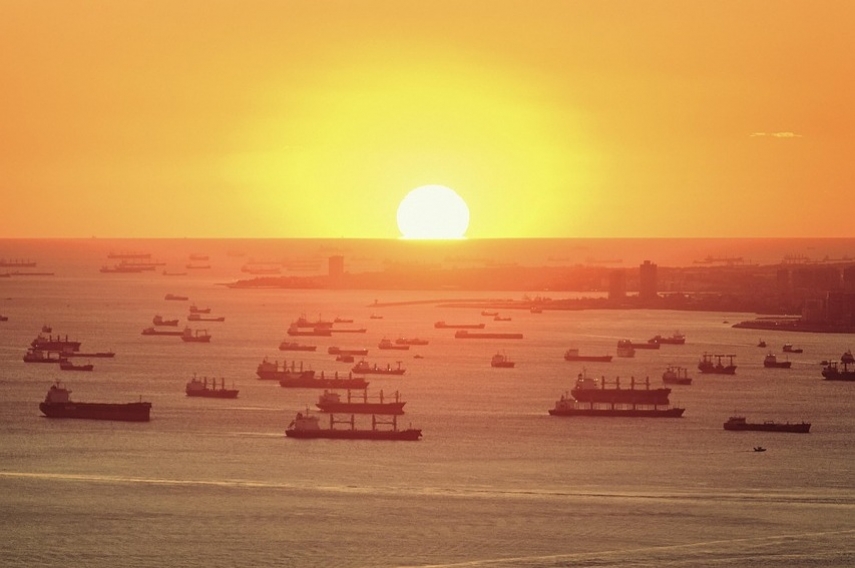
Currently, due to the suspension of shipping traffic in the Strait of Hormuz, the biggest problems are with oil, gas, and mineral fertilizer shipments, but the flow of other goods has not been particularly affected so far.
"The greater risk here is related to the Red Sea, through which a large amount of goods are transported from Asia to Europe. This is a very important trade corridor, and if the hostilities continue and spread regionally, there is a risk that the Red Sea basin may also be affected," Purgailis acknowledged.
When asked which sectors are currently most affected, apart from energy, Purgailis mentioned that sectors with high fuel consumption are already suffering.
"These are the transport and logistics sectors. In the context of Latvia, the important forestry sector is also associated with significant fuel consumption, both for forestry equipment and for the subsequent transport of timber. Unfortunately, agriculture is the next sector waiting to see how events unfold. Spring is here, the fields need to be cultivated, diesel fuel and mineral fertilizers need to be purchased. Farmers certainly have reserves, but as time goes on, this problem will become increasingly acute. As a result, productivity may suffer, which will drive up food prices globally," said Purgailis.
As for heating costs, it will be important whether gas supplies will be restored by summer, when gas is pumped into storage facilities for the next heating season.
Although gas supplies from Qatar have currently stopped, according to Purgailis, it appears that Europe is receiving more liquefied gas, for example from the US. However, events in the Middle East have allowed other gas suppliers to raise their prices as well.
"Everything currently depends on whether prices will stabilize and purchases for the next heating season will be made at normal prices or at high prices. If the war drags on, for example, until the middle of summer, then we will have to build up stocks for the new heating season at higher prices, and then consumers, businesses, and the economy will feel the impact next winter," Purgailis acknowledged.
He also added that since the start of the war in Ukraine, the possibilities for diversifying supply chains have diminished. Therefore, there are concerns that Russia could benefit to some extent from the conflict in the Middle East, as there may be countries that will return to supplies from Russia.
"Russia's ability to continue the war in Ukraine clearly depends on the economic situation and how much it can finance it. In recent years, we have seen that the economic situation in Russia as a whole is deteriorating, and the proportion of spending on the war in Ukraine is increasing. There was hope that at some point Russia's ability to do so would collapse. Now it seems that this moment has been postponed somewhat due to the potential increase in demand for Russian energy resources," said Purgailis.

Please enter your username and password.

2026 © The Baltic Times /Cookies Policy Privacy Policy